10/10/2026
SPT holds a knowledge-sharing session on CO₂ emissions in maritime transport
08/10/2026
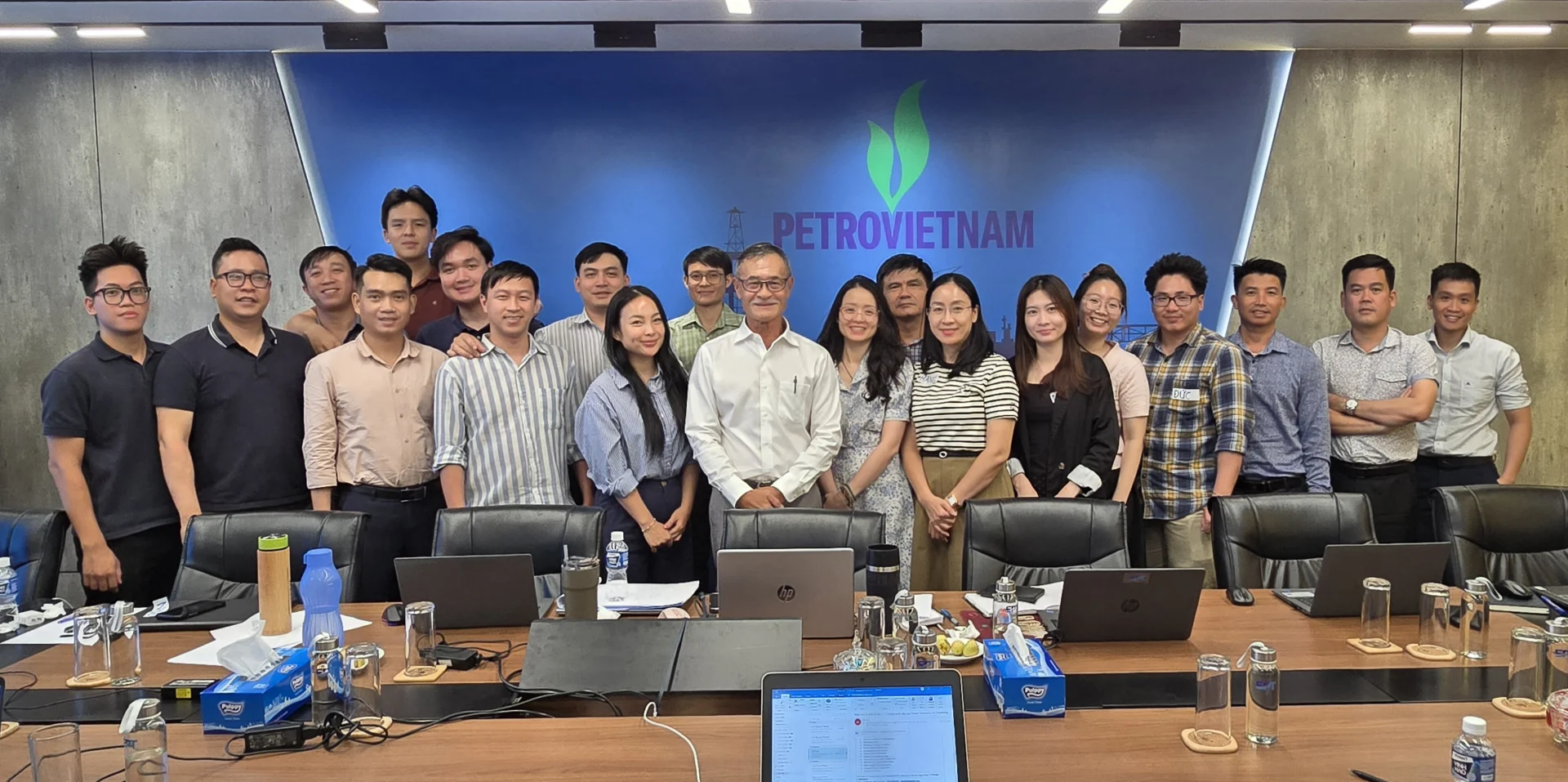
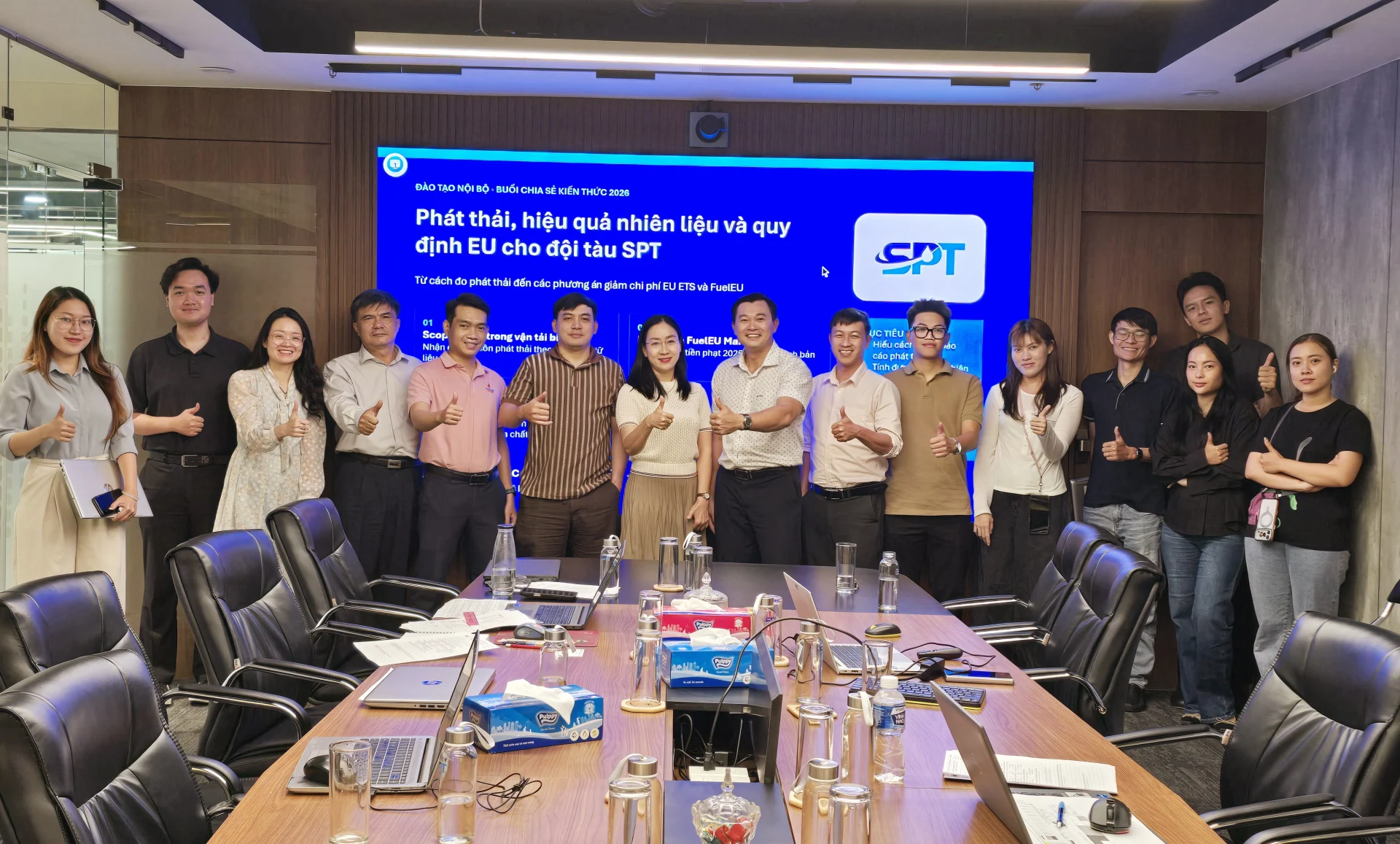
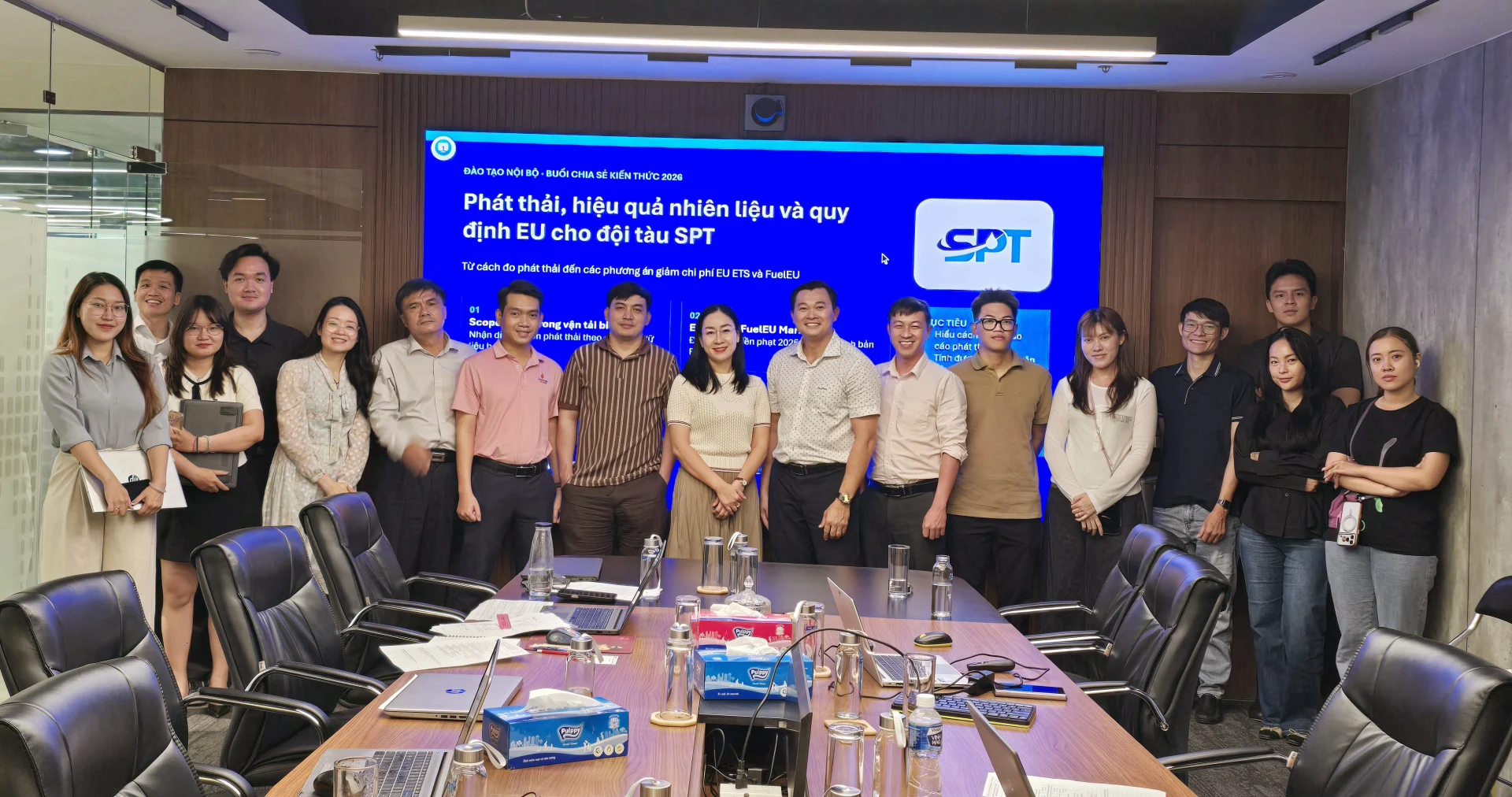
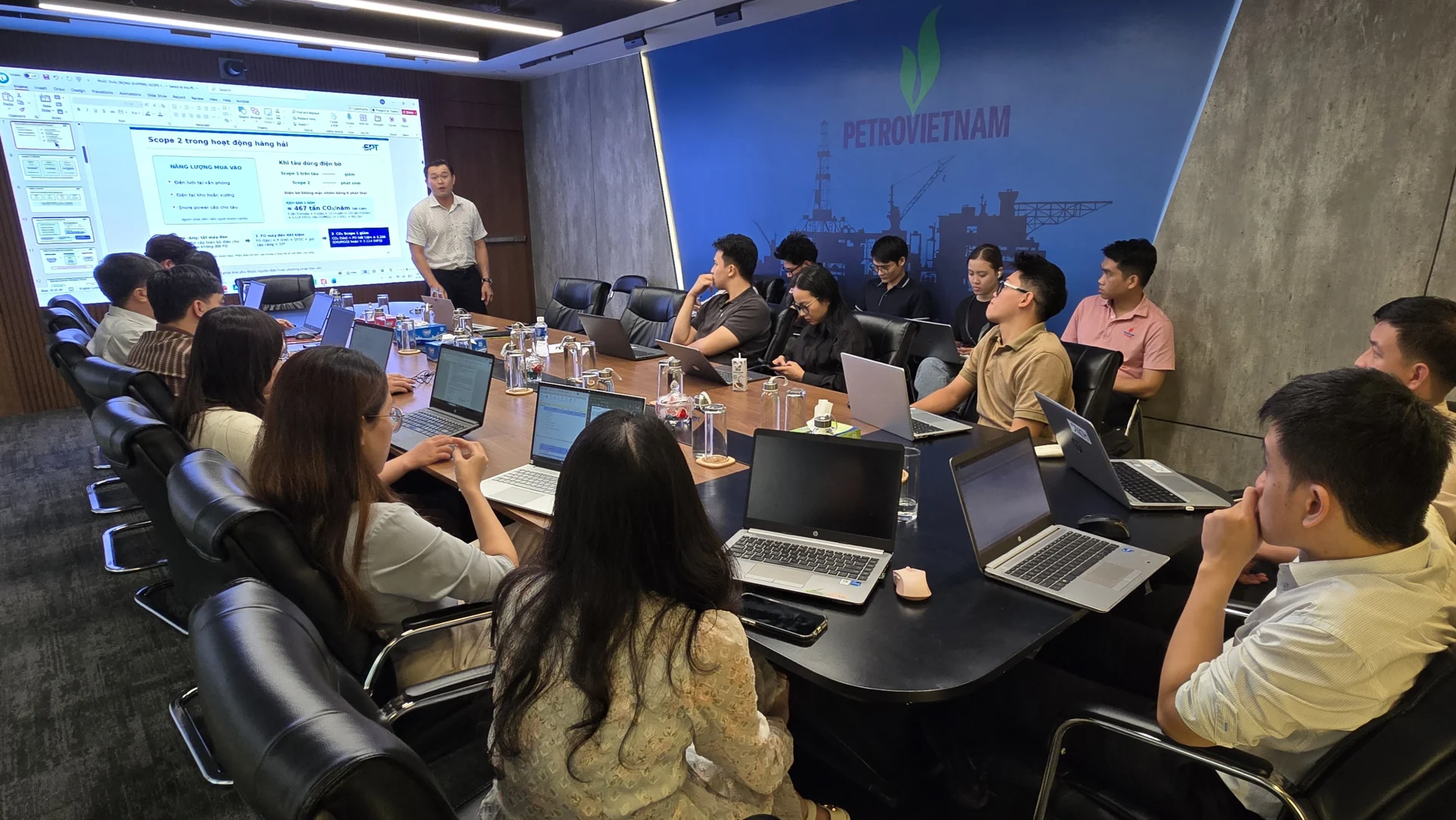
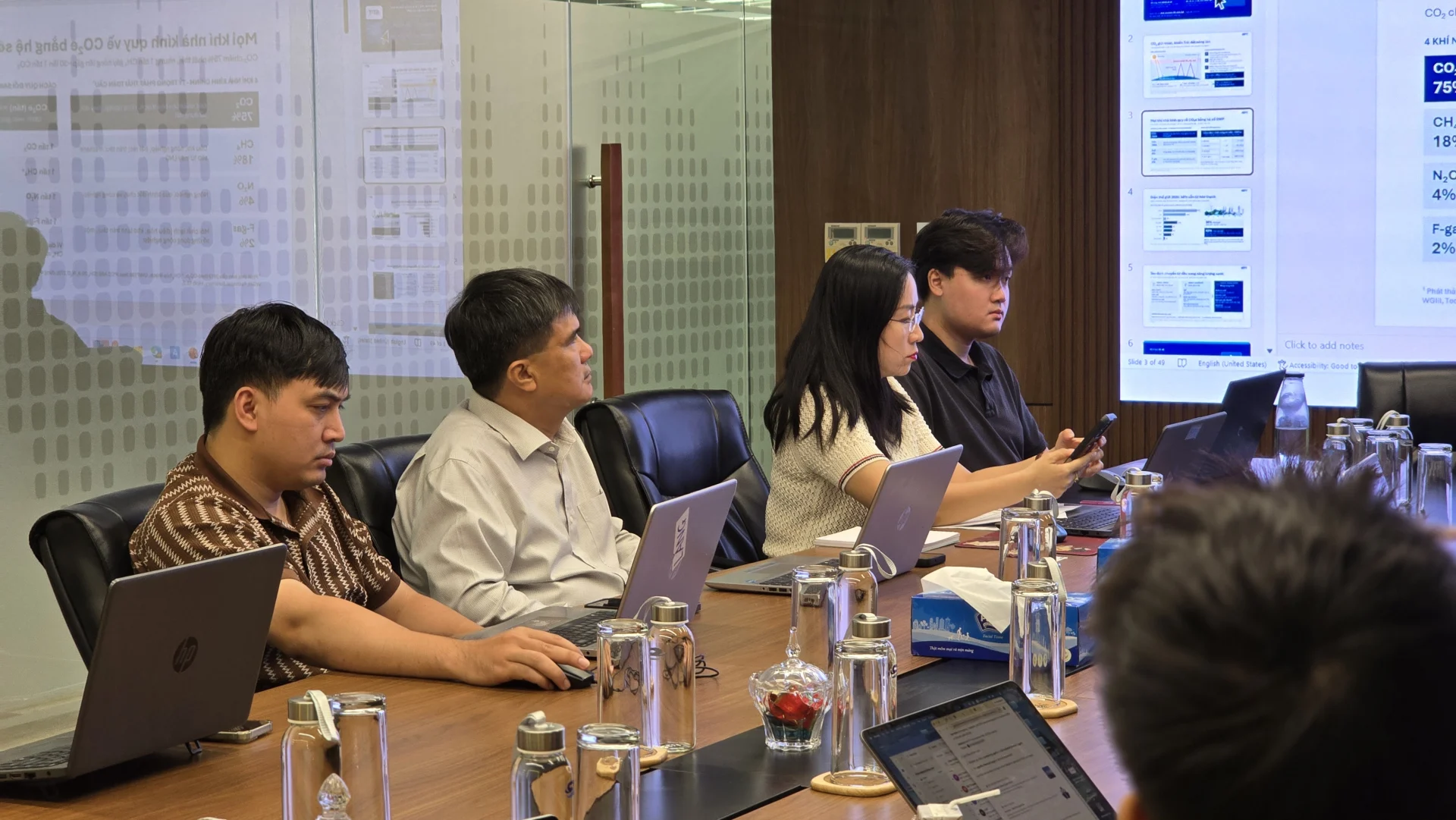
On 08 October 2026, Southern Petroleum Transportation JSC (SPT) held an internal knowledge-sharing session on the topic “CO₂ Emissions in Shipping – Scope 1, 2, 3”, contributing to putting into practice the orientation of PETROVIETNAM and PVTrans on raising ESG awareness and sustainable development.
The session was attended by staff of the Operations Department and the Safety & Legal Department. It is part of SPT’s regular training and professional knowledge updating activities.
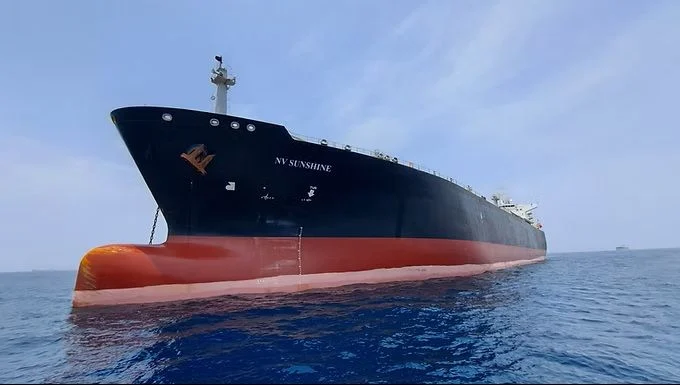
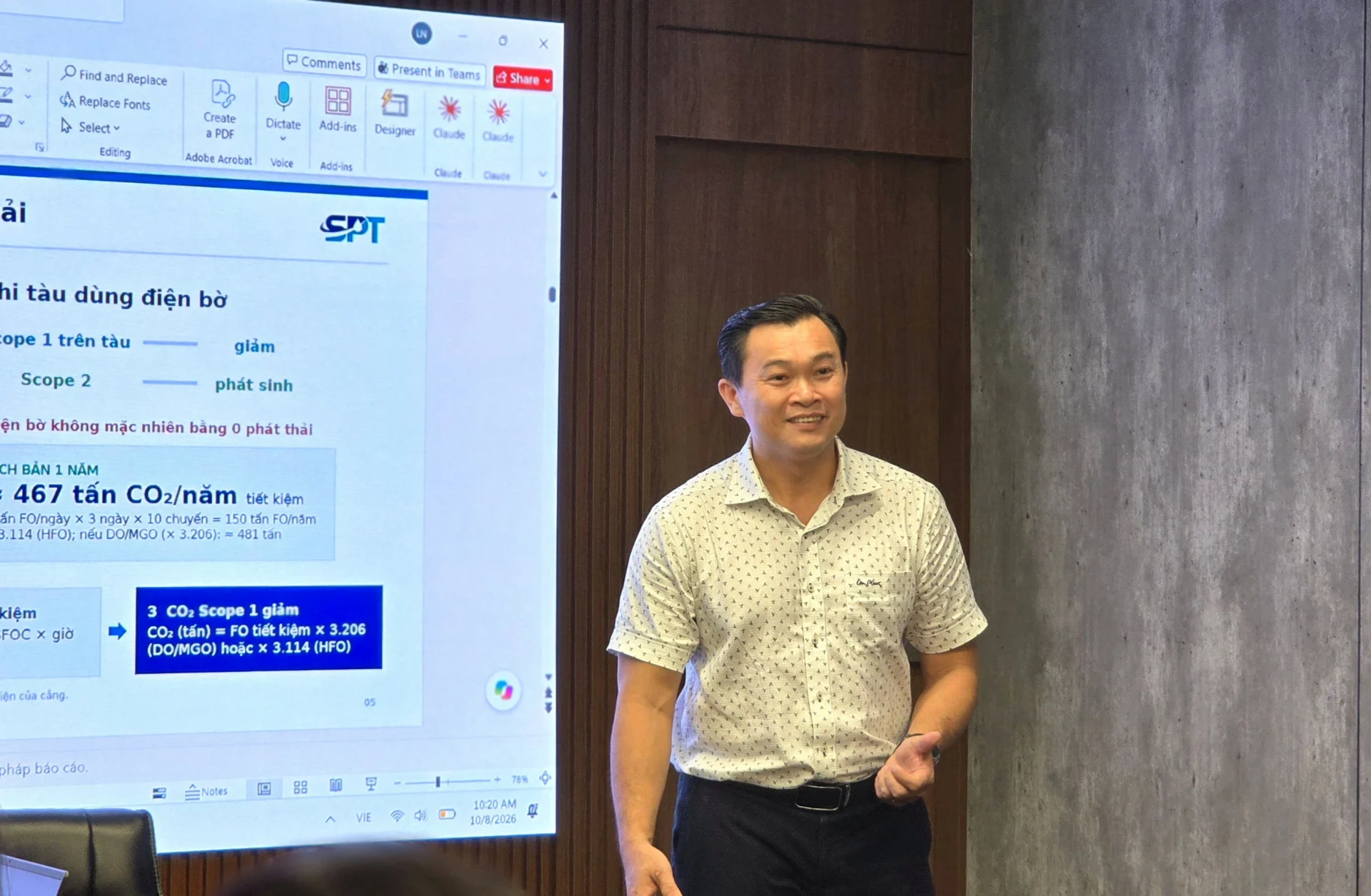
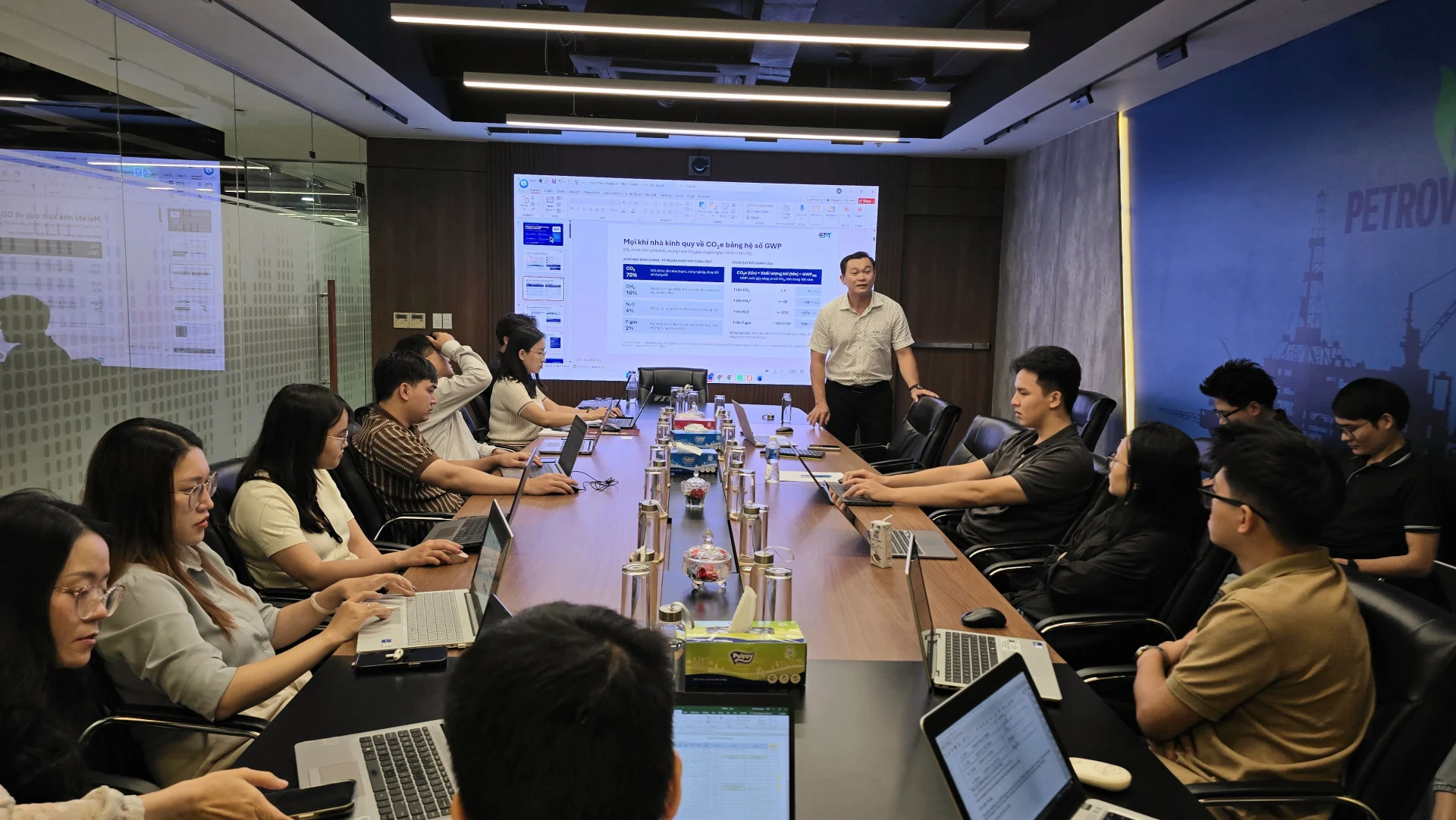
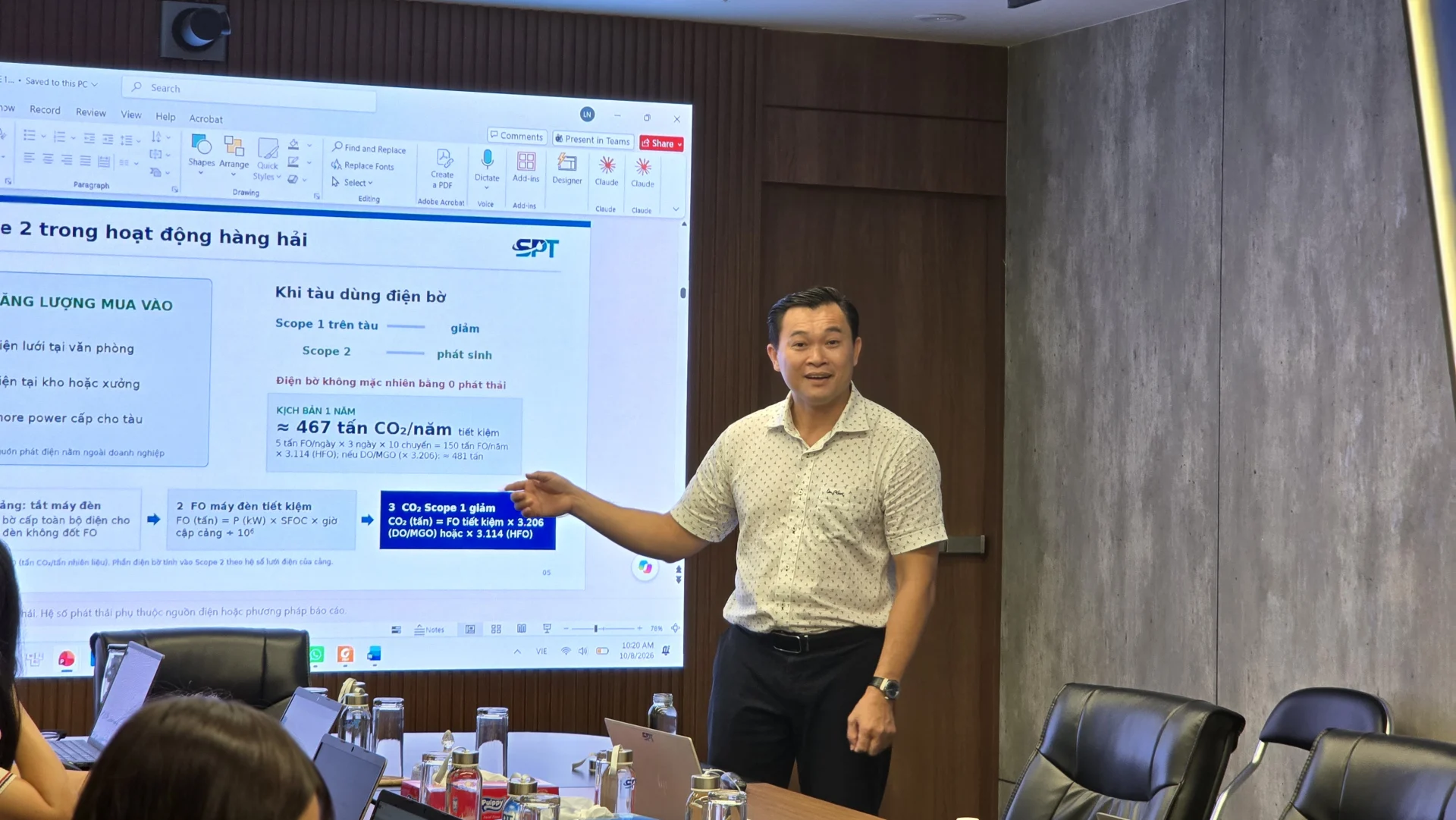
At the session, Mr. Nguyen Son Lam – Deputy Director presented foundational knowledge and practical perspectives on CO₂ emissions in maritime transport. The content focused on the three emission scopes – Scope 1, Scope 2 and Scope 3 – together with how emissions are recorded, measured, reported and controlled. The session also provided updates on new European regulations such as the EU ETS and FuelEU Maritime. Mr. Lam further introduced the fuel-saving solutions SPT is implementing across its fleet, such as energy-saving devices (ESD), weather routing and ultrasonic antifouling.
Beyond the technical content, the session was also an opportunity for departments to exchange views, discuss and relate the topics to their actual work. Through this, staff gained a clearer understanding of each department’s role in improving data quality, ensuring accurate reporting and controlling emissions from operations.
 |
 |
 |
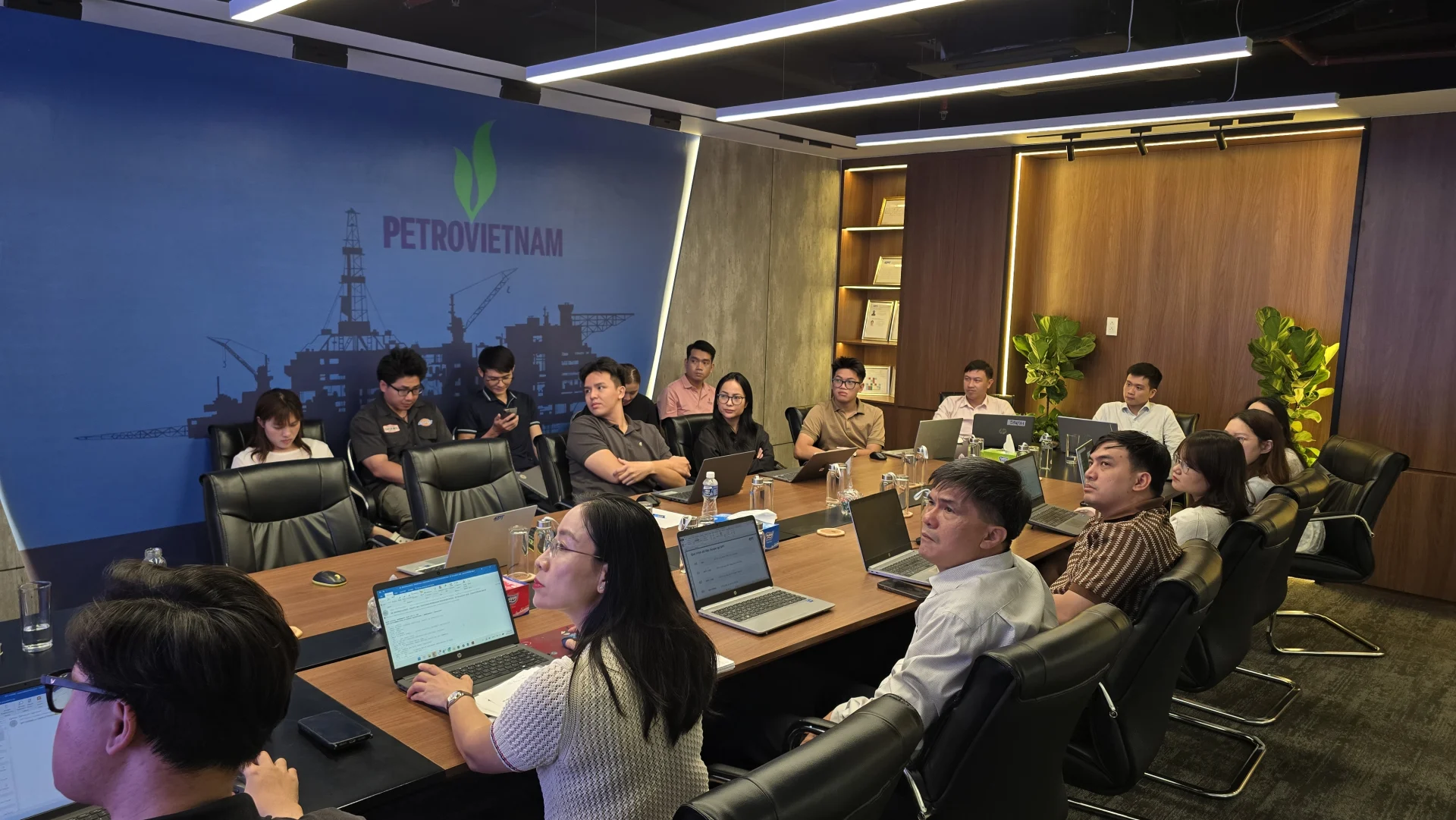 |
From awareness to action
Sustainable development is not only reflected in long-term goals, but also begins with changes in day-to-day work. Given the nature of maritime transport, correctly understanding emissions, accurately recording data and proactively analysing it are important steps. This is how SPT improves management efficiency and aligns with the sustainable development orientation of PETROVIETNAM and PVTrans.
Through internal training and knowledge-sharing activities, SPT continues to build an environment for learning and professional exchange. As a result, each staff member not only better understands their own work but also recognises their role in the common goals of the Company and the entire system.
 |
 |
 |
 |
Other news