
29/08/2026
How Middle East Tensions Are Affecting Vietnam’s Domestic Petroleum Market?
04/03/2026
The conflict in the Middle East has been escalating with increasing complexity. On March 2, Iran declared that it would target all vessels passing through the Strait of Hormuz — widely regarded as the “chokepoint” of global energy flows. This development has placed significant pressure on the global oil market due to supply risks, transportation disruptions, and sharply rising insurance costs. Forecasts indicate that potential supply shortages and rising crude oil prices may directly impact Vietnam’s domestic market, particularly refinery operations.
“Closure” of the Strait of Hormuz and the Risk of Energy Flow Disruption
The Strait of Hormuz is currently one of the world’s most strategically important energy transportation routes, connecting major oil-producing countries in the Gulf region with global consumption markets, particularly Asia. According to statistics from the U.S. Energy Information Administration (EIA), approximately 20 million barrels per day of oil and condensate pass through this area, equivalent to nearly 20% of global oil consumption and accounting for more than one-quarter of global seaborne oil trade. Notably, about 84% of oil flows through the Strait of Hormuz are directed toward Asian markets, making the region the most directly and rapidly affected when Middle East tensions escalate.
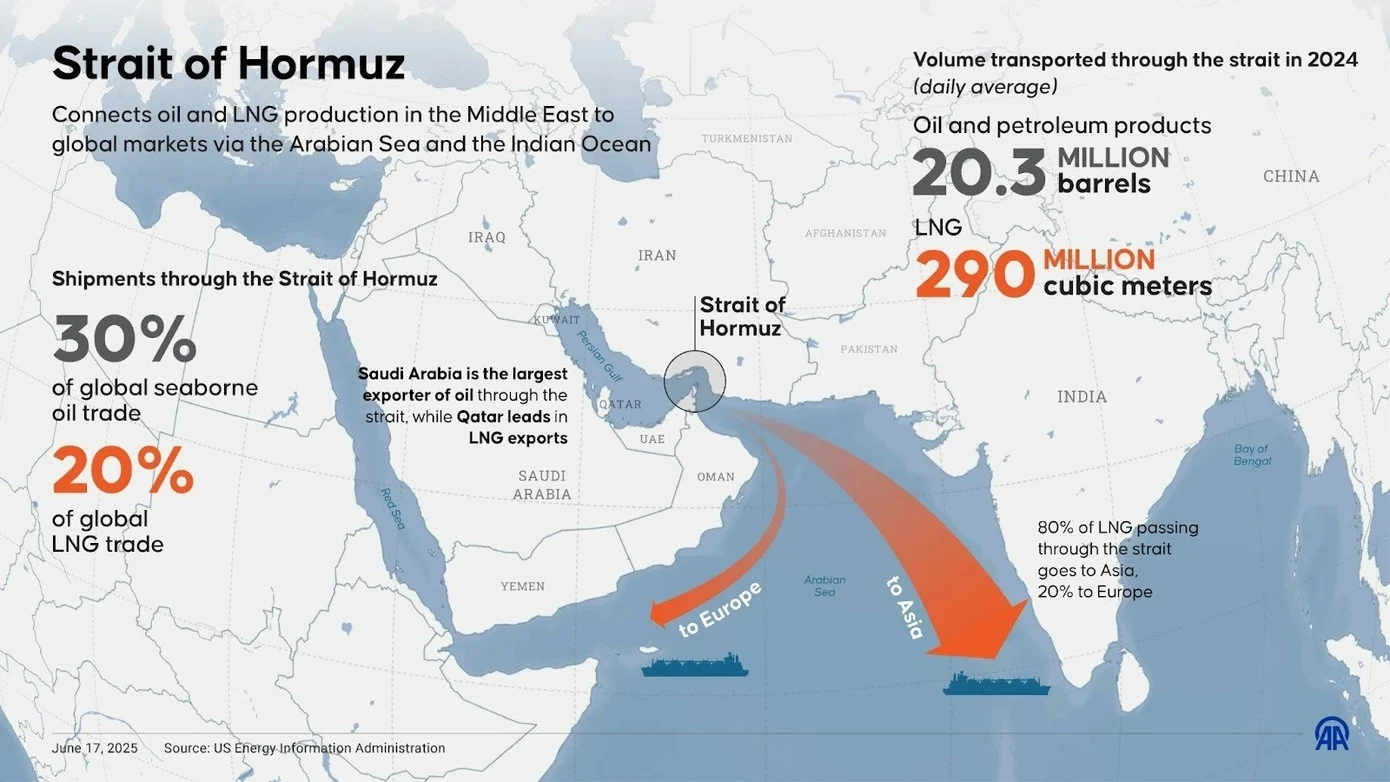 |
| The volume of oil and condensate transiting the Strait of Hormuz reaches approximately 20 million barrels per day, equivalent to nearly 20% of global oil consumption and more than one-quarter of global seaborne oil trade. |
In practice, major exporting countries such as Saudi Arabia and the United Arab Emirates have bypass pipeline systems as contingency measures. However, the total replacement capacity of these systems is only about 2.6 million barrels per day and is considered insufficient to compensate for a severe disruption of maritime routes. Therefore, Middle East conflicts are not merely geopolitical issues but also key determinants of oil price premiums, logistics costs, maritime insurance expenses, and supply stability for refineries in Asia — one of the world’s fastest-growing regions with rapidly increasing energy demand.
Under high-risk scenarios, J.P. Morgan estimates that if 2.1 million barrels per day of Iranian oil were disrupted, Brent crude prices could immediately move toward USD 120 per barrel. Goldman Sachs warns that with OECD commercial inventories at low levels, any actual supply disruption of 1 million barrels per day or more could add at least USD 20–25 to current crude oil prices.
In the transportation sector, S&P Global and Reuters warn that war-risk insurance premiums for tankers passing through the Strait of Hormuz could surge by 300–500%, while Daniel Yergin noted that markets could shift from a “mild surplus” to a “psychological shortage” within just a few hours.
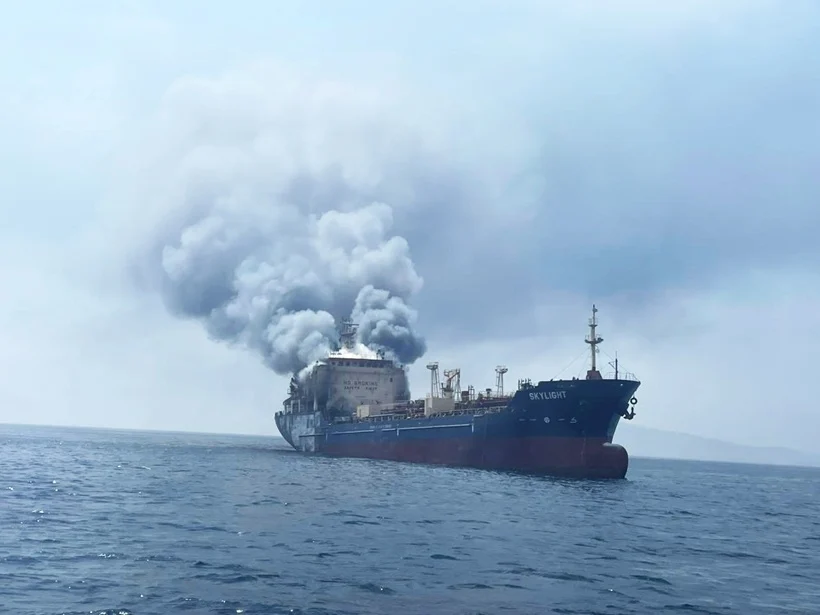 |
| Oil tanker attacked in the Gulf region on March 2. |
In reality, tensions in the Middle East continue to escalate. On March 2, Iran declared it would attack all vessels passing through the Strait of Hormuz. According to forecast scenarios, the market could rapidly shift from a “price crisis” to a “scarcity” situation. When backup pipeline capacity proves insufficient, the shock could spread across the entire global energy supply chain. If the conflict lasts two to three weeks, prompt cargo shortages in Asia may begin to emerge, forcing refineries to adjust crude slates or reduce operating rates. If disruptions extend to one month, supply shortages may become a reality, energy prices could surge to rebalance supply and demand, logistics volatility would intensify, commercial inventories would decline rapidly, and crack spreads would fluctuate significantly.
Under a three-month conflict scenario, oil demand could decline sharply due to excessively high prices, with the market self-adjusting through reduced consumption, releases from strategic petroleum reserves (SPR), and restructuring of global trade flows, increasing the likelihood of prices exceeding USD 100 per barrel.
A key point is that price volatility may occur before the world actually experiences a physical oil shortage. After February 28, 2026, market assessments indicated that oil markets had shifted from pricing risk to pricing actual conflict conditions. However, according to the International Energy Agency (IEA) and multiple analytical organizations, global supply remains relatively adequate, meaning price fluctuations mainly reflect risk premiums and logistics risks rather than physical shortages.
Supply Risks and Rising Costs Directly Impact the Domestic Market
When global markets experience strong volatility, impacts on the domestic petroleum market are unavoidable. First, international crude oil prices increase and fluctuate sharply as geopolitical risk premiums return. Second, associated costs may rise rapidly under conflict conditions, particularly logistics and maritime insurance costs. Forecasts indicate that war-risk insurance premiums for tankers transiting Hormuz may increase by 300–500%, meaning import costs could rise significantly even without physical shortages.
Another concerning factor affecting the domestic market is potential supply chain disruption.
Some exporting countries may restrict exports to prioritize domestic demand, shipping and insurance markets may become unpredictable, and delivery times may lengthen.
These factors could directly affect refinery operating plans, especially toward the end of Q2 and early Q3 of 2026.
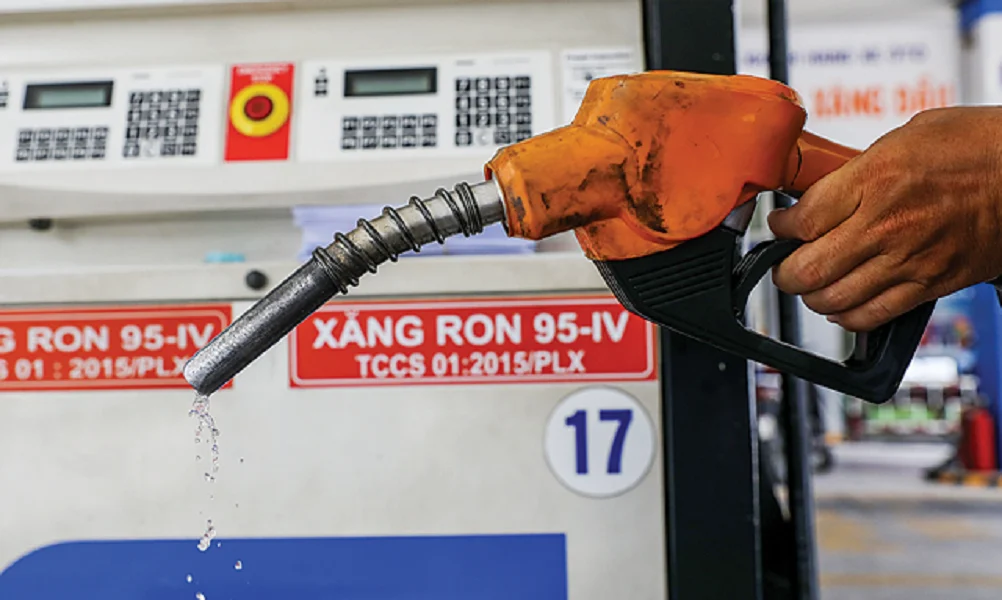 |
| The Middle East conflict will directly impact the domestic petroleum market. |
When these factors combine, pressure on the domestic market arises not only from rising oil prices but also from disruption risks and delivery delays, increasing uncertainty in supply balancing. As the operator of the Dung Quat Refinery — supplying more than 30% of Vietnam’s petroleum output — Binh Son Refining and Petrochemical Joint Stock Company (BSR), a Petrovietnam subsidiary, will also be directly affected.
Currently, Dung Quat Refinery uses approximately 30–35% imported crude oil feedstock, mainly sourced from West Africa, the Mediterranean, the United States, and partly the Middle East. If the conflict persists, rising crude prices, freight rates, and insurance premiums could significantly increase input costs and financial risks for domestic fuel production.
Regarding feedstock planning, from March to May 2026, BSR has signed contracts to purchase approximately 3 million barrels of imported crude oil, including Qua Iboe, Bu Attifel, Medanito, and Palanca Blend. Although these sources are outside the direct conflict area, geopolitical tensions may still indirectly affect delivery schedules, transportation costs, insurance expenses, and maritime safety. Procurement pressure is expected to increase further, with additional spot purchases estimated at 900,000 to 1 million barrels in May 2026 and 1 to 1.3 million barrels in June 2026 to operate the refinery at 118% capacity.
Beyond crude oil, in February 2026 BSR procured high-octane gasoline blending components; however, due to limited supply and strong market volatility, purchases could not meet planned volumes, affecting production expansion plans for March 2026.
Mr. Nguyen Viet Thang, CEO of BSR, stated that to achieve a minimum equivalent operating capacity of 120% (including crude oil and intermediate feedstock), Dung Quat Refinery is actively seeking additional feedstock during March–April 2026, increasing procurement pressure under unfavorable market conditions.
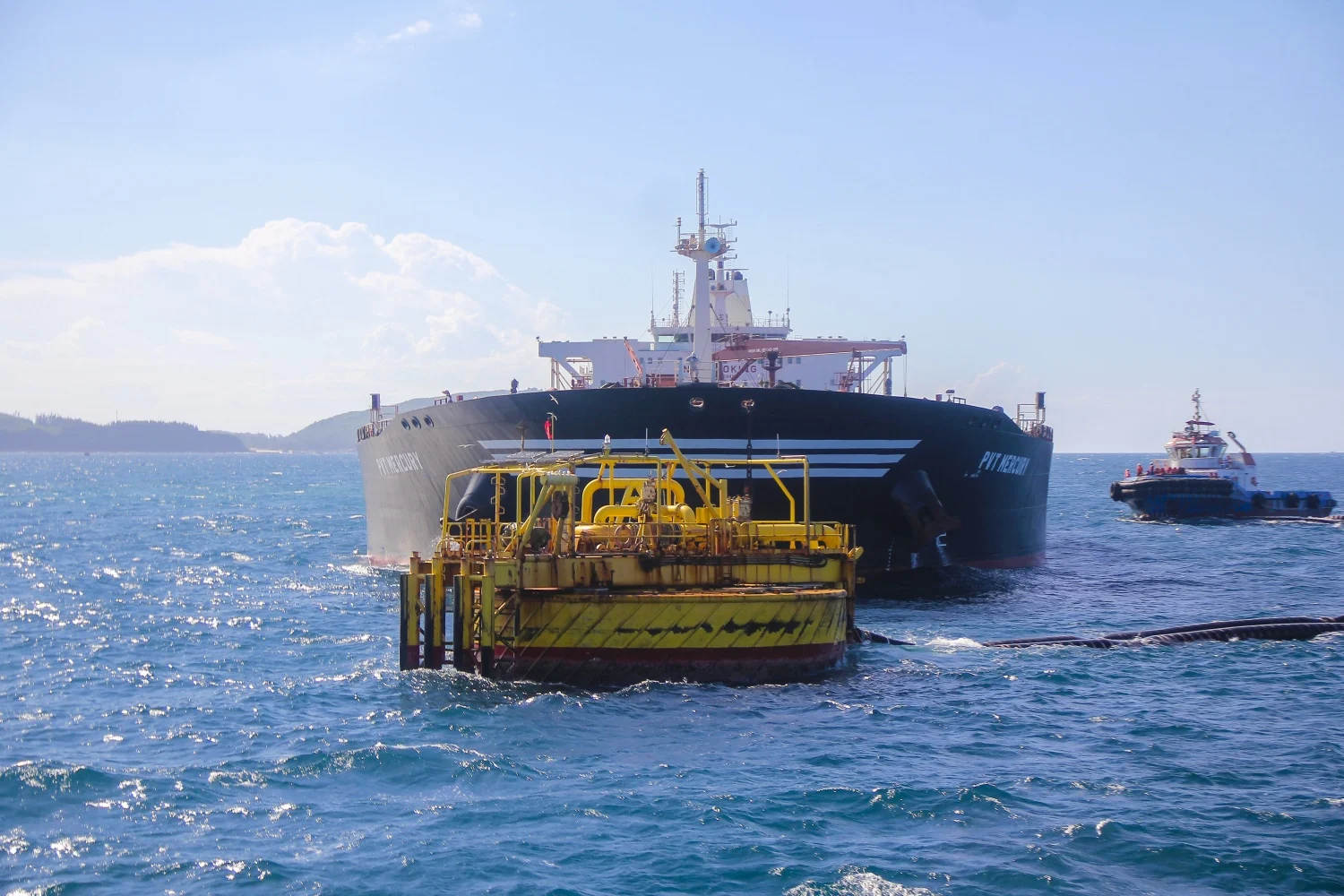 |
| Crude oil import operations at Dung Quat Refinery. |
Amid global instability, demand for domestic crude oil is expected to rise significantly, leading to intense competition in procurement tenders. Failure to secure planned cargoes could affect stable operations and potentially force capacity reductions or prevent fulfillment of assigned production plans, directly impacting the domestic petroleum market.
In response, BSR has proposed prioritizing maximum procurement of domestically produced crude oil and condensate while applying a temporary mechanism prioritizing domestic crude supply for Dung Quat Refinery processing, limiting exports during the high-risk period through the end of Q3 2026 or until international markets stabilize. In particular, to ensure sufficient feedstock for operations during May–June 2026, BSR has requested approval to directly purchase Ruby, Bunga Orkid (BO), and Chim Sao cargoes delivered during this period at the highest recent bid prices as a contingency solution to secure timely supply amid market volatility.
The Middle East conflict will directly affect Vietnam’s domestic petroleum market not only through higher crude oil prices but also through supply chain disruption risks and sharply rising logistics and insurance costs.
To address these challenges, BSR must simultaneously secure sufficient crude oil and blending components, maintain delivery schedules, and ensure stable refinery operations amid an increasingly uncertain global market environment. To achieve this, BSR requires policy support from the Government and relevant ministries to maintain safe and stable operations at Dung Quat Refinery, stabilize the domestic market, and ensure national energy security.
(Source https://www.pvn.vn/xung-dot-trung-dong-anh-huong-den-thi-truong-xang-dau-trong-nuoc-nhu-the-nao)
Other news